

Foreign News
NASA Issues Rare Emergency Order Over Space Station Air Leak


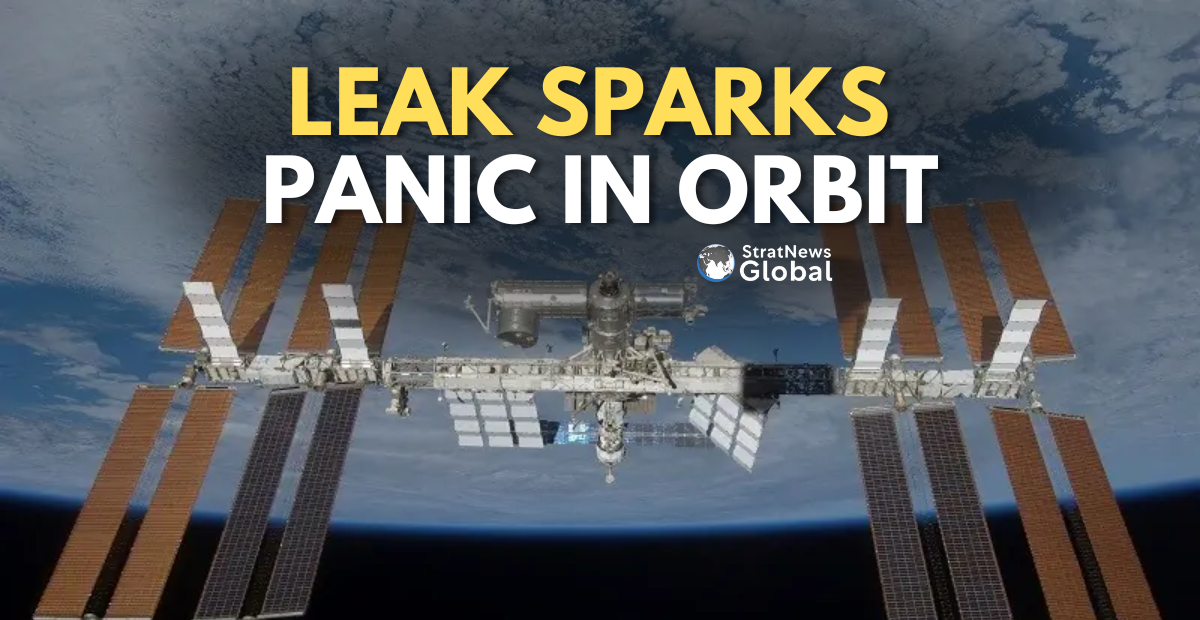
Five astronauts aboard the International Space Station (ISS) were ordered to prepare for a possible evacuation on Friday after an air leak on the Russian section of the orbital laboratory worsened, prompting a rare emergency response.
NASA instructed the four-member Crew-12 team and one additional American astronaut to enter their docked SpaceX Crew Dragon spacecraft as a precaution while engineers assessed the situation.
The safe-haven order remained in effect for roughly two hours before being lifted.
The leak originated in the Russian-operated Zvezda Service Module, which has experienced recurring air leak issues for several years.
According to NASA officials, the leak rate reportedly doubled from around one pound of air per day to two pounds per day, raising concerns among mission controllers.
Meanwhile, Roscosmos said two leaks had been identified. One was sealed quickly, while preparations were underway to address the second.
Russian officials stressed there was no immediate danger to either the crew or station systems.
Disagreement Over Repair Strategy
Reports indicated that Russian cosmonauts planned to use a saw to access the suspected source of the leak inside the module.
NASA reportedly disagreed with the proposed repair method, contributing to the decision by mission controllers in Houston to initiate safe-haven procedures while discussions continued.
The evacuation alert was later cancelled after Roscosmos paused repair efforts and both agencies resumed consultations.
NASA said it looked forward to working with its Russian counterparts on a collaborative solution.
Rare Emergency on the ISS
Safe-haven procedures are uncommon aboard the space station and are typically reserved for potential collisions with space debris or significant technical concerns.
Despite several incidents over its 27-year history, astronauts have never been forced to abandon the station.

The ISS currently hosts seven crew members from NASA, Roscosmos and the European Space Agency.
Future of the Space Station
The incident comes as US lawmakers consider legislation that would extend the operational life of the ISS until 2032.
Supporters argue that an extension would provide more time for commercial companies to develop replacement space stations while helping maintain America’s position in an increasingly competitive space environment that includes China’s rapidly expanding space programme.
(with inputs from Reuters)



