Foreign News
NATO Reinvents Deterrence For New Era


The NATO Summit in Ankara concluded with a declaration that places industrial strength, advanced technology and sustained defence investment at the centre of the alliance’s long-term security strategy, signalling a shift in how NATO intends to deter future threats.
The Ankara Declaration reaffirms NATO’s commitment to collective defence while outlining plans to expand defence production, integrate artificial intelligence into military planning and strengthen the alliance’s industrial base. It also reflects a growing role for European allies and Canada in sharing responsibility for the alliance’s security alongside the United States.
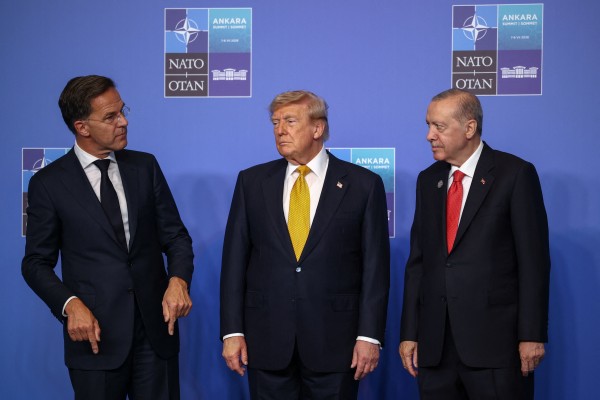
US President Donald Trump used the summit to renew calls for higher defence spending by NATO members. While praising Turkish President Recep Tayyip Erdoğan for hosting what he described as a “very successful” summit, Trump criticised Spain over its defence spending, calling it “a terrible partner” within the alliance before later saying the meeting had shown “a lot of love” and “a lot of unity” among member states.
NATO Secretary General Mark Rutte acknowledged differences among allies but said they were resolved through consensus, describing the alliance as “more together than ever” following the Ankara discussions.
One of the summit’s key outcomes was a renewed focus on defence manufacturing. NATO announced more than $50 billion in new defence procurements and committed to expanding production capacity, strengthening defence supply chains and reducing barriers to defence trade among allies.
The declaration reflects lessons drawn from the war in Ukraine, where the ability to sustain production of ammunition, weapons and military equipment has become a critical factor. NATO said industrial capacity would be treated as a strategic capability alongside conventional military strength.
Support for Ukraine remains central to the alliance’s plans. NATO members pledged €70 billion in military assistance, equipment and training for 2026 and said they intend to maintain similar levels of support in 2027, signalling a move towards longer-term, predictable assistance rather than emergency aid packages.
Ukrainian President Volodymyr Zelenskyy described his meeting with Trump as productive, saying discussions focused on strengthening Ukraine’s air defences as Russian missile and drone attacks continue. Trump also indicated that Ukraine could be allowed to manufacture Patriot missile systems under licence, potentially strengthening its long-term defensive capabilities.
The declaration identifies Russia as NATO’s principal strategic challenge, with defence investment, capability development and force modernisation framed around long-term deterrence in the Euro-Atlantic region.
The alliance also announced plans to develop an interoperable transatlantic warfighting cloud and expand the use of artificial intelligence in military planning, highlighting the growing importance of data, automation and faster decision-making in future conflicts.
While Iran receives comparatively limited attention in the declaration, NATO reaffirmed that Tehran must never acquire nuclear weapons and stressed the importance of maintaining freedom of navigation through the Strait of Hormuz, citing its importance to regional and global security.
Türkiye also emerged from the summit with an enhanced strategic profile. Erdoğan said Ankara was prepared to assume greater responsibility within NATO and reiterated its willingness to facilitate dialogue between Russia and Ukraine. Trump also said he was open to approving the sale of F-35 fighter aircraft to Türkiye, adding that the decision would take into account Erdoğan’s cooperation with Washington.

The Ankara Declaration marks a broad shift in NATO’s strategic outlook, placing industrial resilience, technological innovation and sustained political commitment alongside conventional military capabilities as the alliance prepares for a prolonged period of geopolitical competition.