

Education
Bassey calls for power shift in Nigeria’s energy transition – EnviroNews


– Advertisement –
The Executive Director of the Health of Mother Earth Foundation (HOMEF), Dr Nnimmo Bassey, has called for a fundamental shift in the way energy, land and natural resources are governed, arguing that the global energy transition must go beyond replacing fossil fuels with new technologies.
Bassey made the call on Tuesday, September 22, 2026, during HOMEF’s School of Ecology on “Commons, Care, and Community Energy Sovereignty” in Lagos.
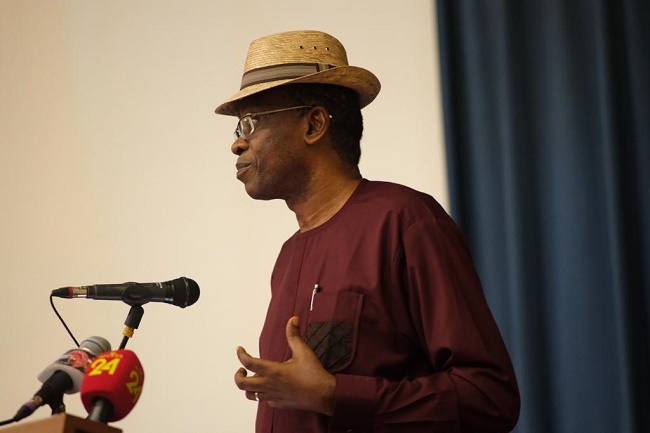
He said the socio-ecological crises confronting the world were largely rooted in humanity’s disconnection from nature and communal responsibility, reinforced by economic and political systems that prioritise exploitation and commodification.
According to him, Nigeria and other African countries remain trapped in a colonial extractivist model that permits environmental degradation and the impoverishment of communities as long as natural resources continue to generate revenue for corporations and governments.
He said the model had resulted in the enclosure of land and water bodies, displacement of communities, concentration of decision-making and the commodification of nature.
Bassey warned that the expansion of fossil fuel and critical-mineral frontiers risked reproducing the same injustices under the guise of an energy transition.
“The question before the energy transition is not merely how quickly we can replace oil, gas, and coal with other sources of energy. It is whether we can replace the logic that has allowed a few to control the conditions of life for the many,” he said.
He questioned whether the transition to renewable energy would genuinely transform societies if communities continued to be displaced, land enclosed, water commodified and people excluded from decisions concerning resources essential to their livelihoods.
Bassey said a transition that merely moved extraction from oil wells to lithium mines, or from pipelines to large-scale energy infrastructure, could leave the underlying system unchanged.
He argued that the crisis facing the world was not only an energy crisis but also a crisis of relationships.
“It is a crisis of how we have come to see land as property, water as a commodity, forests as timber, seeds as intellectual property, minerals as deposits waiting to be extracted, and communities as obstacles standing in the way of investment,” he said.
The environmentalist said the concept of the commons offered an alternative by recognising that communities had historically developed systems for sharing, governing and protecting resources such as rivers, forests, grazing lands, fishing grounds, seeds, knowledge and cultural spaces.
He warned that when these relationships were broken, communities lost not only control over resources but also their collective memory, knowledge and capacity to make decisions about their future.

Bassey called for a community-centred approach to energy development in which people would participate meaningfully in decisions on how energy is produced, distributed and used.
He said energy systems should serve life and community wellbeing rather than primarily support endless accumulation.
“The transition we need, therefore, cannot simply be a transition of technologies. It must be a transition of power,” he said.
According to him, such a transformation should move societies “from extraction to regeneration, from enclosure to shared stewardship, from concentration to democratic control, from commodification to relationship, and from decisions made over people to decisions made by the people.”
Bassey also cautioned that the world could end up with cleaner technologies without addressing the political and social structures responsible for environmental degradation.
“Otherwise, we risk arriving at a future where the machines are cleaner, but the politics remain dirty; where the energy is called renewable, but the relationships remain extractive,” he said.
He said HOMEF’s Schools of Ecology and Wisdom Gatherings were exploring knowledge embedded in African and other indigenous languages, cultures and traditions to help develop more equitable systems of environmental stewardship.
Bassey said the emerging demands included ending the erosion of commons governance, rebuilding ecological integrity and strengthening social cohesion.
He added that a genuine socio-ecological transition required justice, movement building and the recovery of popular power, with fundamental questions around who governs land, livelihoods and the systems that sustain life.
He called for the development of systems based on energy and resource democracy, reparative and restorative justice, regenerative economies, agroecology, stewardship and equitable redistribution of power.
Bassey expressed optimism that cooperation and solidarity could provide the foundation for a post-extractivist future in which communities have greater control over the resources and systems that shape their lives.



