

Education
Discovery Days: ‘Glittering Science’ reveals the hidden beauty of FAMU-FSU College of Engineering crystal research


Curiosity, creativity and cutting-edge research will come together at “Glittering Science,” a free FSU Discovery Days event exploring the hidden beauty of materials science.
The event brings together William Meier, assistant professor of materials science and engineering at the FAMU-FSU College of Engineering, and Scott Holstein, the college’s professional photographer, for an exploration of how scientific discovery can become visual art.
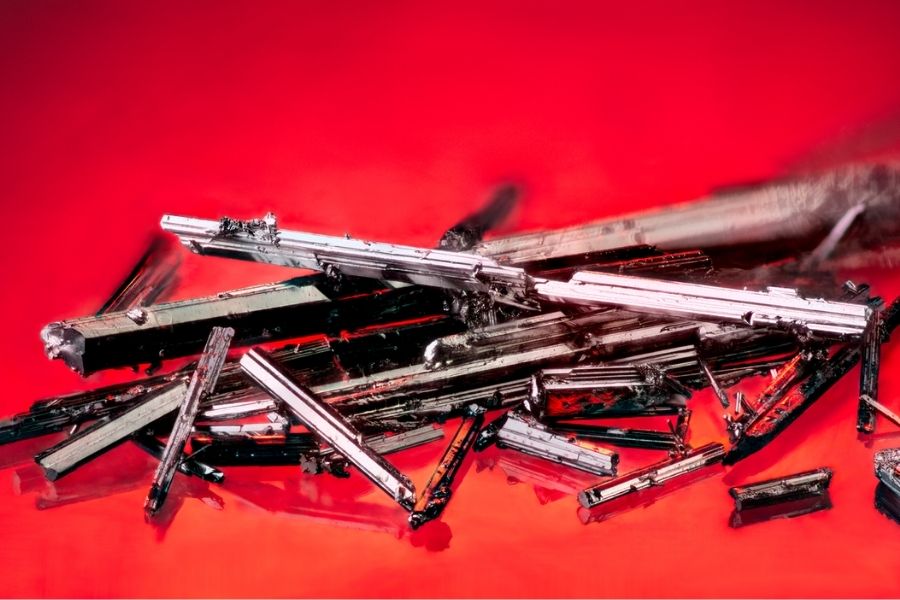
In his laboratory, Meier grows tiny metallic crystals to investigate fundamental questions about materials and their properties. Through specialized macro photography, Holstein transforms those same crystals into striking images that reveal intricate shapes, textures and colors that are nearly impossible to appreciate with the naked eye.
“Glittering Science” will feature a lecture, reception and gallery showcasing crystals grown by Meier and his students alongside Holstein’s photographs. The event will take place:
WEDNESDAY, OCT. 21
6:30 – 8 P.M.
INTERDISCIPLINARY RESEARCH AND COMMERCIALIZATION BUILDING
2001 LEVY AVE.
TALLAHASSEE, FLORIDA
Visit the event website for more information and to register.
Crystals like those produced in Meier’s laboratory can play a role in technologies including microchips, lasers, quantum sensors and fusion reactor components. Large, high-quality single crystals are especially valuable because researchers can measure how properties such as electrical conductivity and magnetism change in different directions, offering important clues about the behavior of electrons within a material.
But science does not always produce exactly what researchers expect. Sometimes the surprises are the most visually interesting.
“Some of the most beautiful crystals are those that don’t go as planned,” Meier said.

Although visually striking, the crystals are created first and foremost for scientific discovery.
“We grow crystals to support scientific experiments and to answer fundamental questions about materials,” Meier said. “By studying their behaviors, such as magnetism, superconductivity and how they conduct electricity, we gain insight into the underlying physics and can design new materials to solve technological challenges.”
Capturing crystal photographs
While Meier studies what the crystals can reveal about the physics of materials, Holstein approaches them from a different perspective.
“When I saw the crystals up close, through the lens, they looked like other-worldly landscapes,” Holstein said. “It took a macro lens that was able to magnify the crystal up to five times its actual size to see the details of this secret world.”
Capturing those details required much more than simply pointing a camera at a crystal. At extreme magnification, only a tiny portion of the object can appear sharp in a single photograph. Holstein used a technique called focus stacking, combining numerous photographs taken at slightly different focal points to create a single detailed image.
“At 5-to-1 magnification, just a sliver of the crystal is sharp in a shot, so stacking is a must,” Holstein said.
Each finished photograph may combine dozens or even hundreds of individual images, revealing a world of unexpected structures and patterns in crystals only millimeters across.



