

Education
FSU art historian wins Berlin Prize for research on images, printing and power


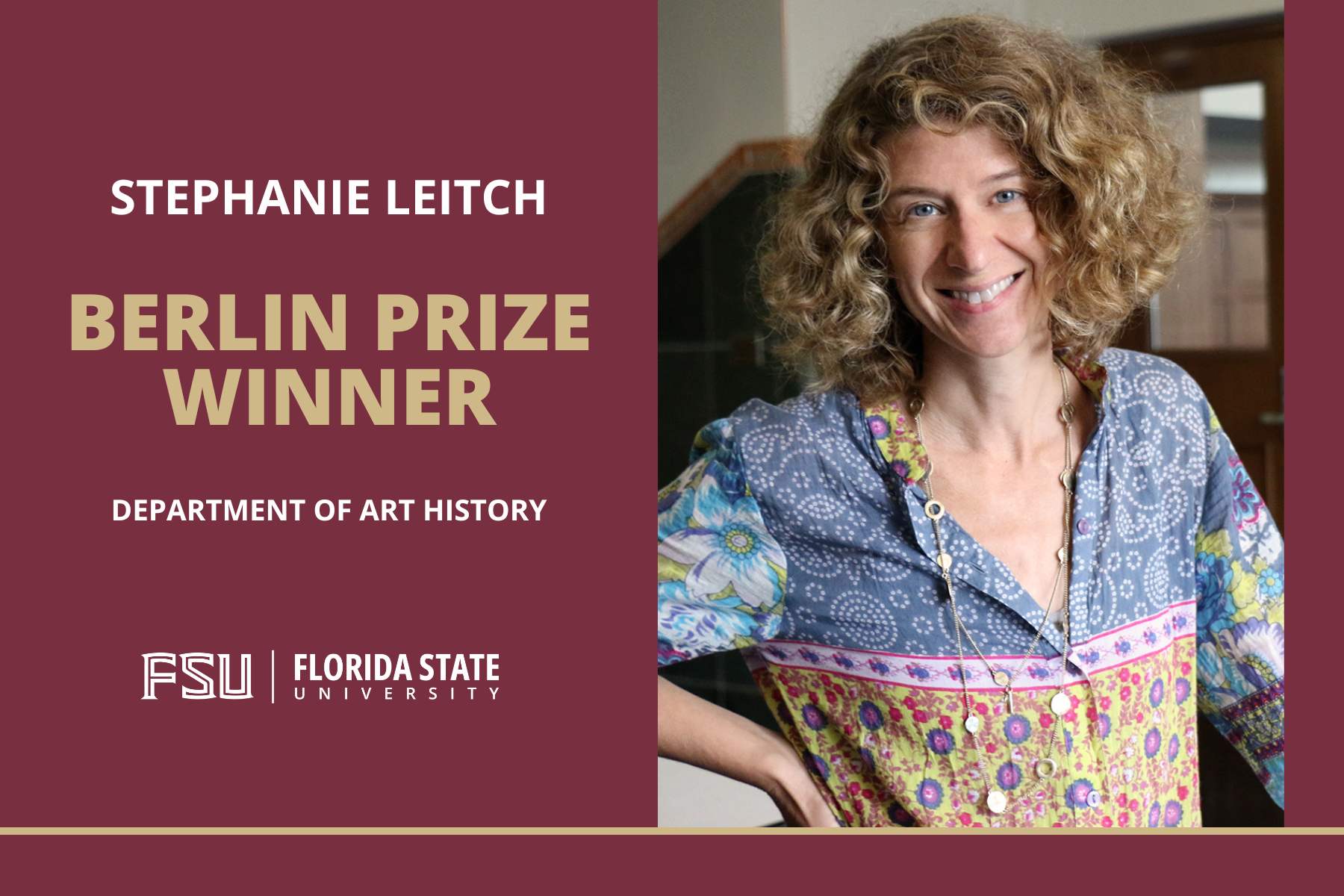
Florida State University art historian Stephanie Leitch has been named a 2026-2027 Berlin Prize Fellow by the American Academy in Berlin for research that examines how copied images shaped early modern knowledge of the world.
Leitch, professor and chair of FSU’s Department of Art History, will use the fellowship to complete a book exploring how recycled images influenced perceptions of distant peoples, places and animals during the 16th and 17th centuries.
The Berlin Prize is awarded annually to U.S.-based scholars, writers, composers and artists who represent the highest standards of excellence in their fields.
“This highly competitive honor reflects both the strength of Dr. Leitch’s scholarly work and the national and international reputation of our faculty,” said James Frazier, dean of the College of Fine Arts. “This recognition underscores the caliber of research and creative activity taking place among our faculty and the global impact of their work.”
During her residency in Berlin, Leitch will conduct research for a co-authored book, New Worlds, Recycled Images: The Imprint of the Copy in Early Modern Travel Narratives, written with Yale University scholar Lisa Voigt.
The project examines how printers reused woodblock images in books about newly encountered places, peoples and animals. As those images circulated across different publications, they often carried assumptions and inaccuracies into new contexts, helping shape how readers understood the wider world.
“I have the great fortune of finally getting a fellowship at the perfect stage for a writer,” Leitch said. “The chapters have been mostly written, and I get to reshape the book while being close to my primary sources.”

Leitch will work with the Derschau Sammlung at Berlin’s Kupferstichkabinett, home to one of the world’s best-preserved collections of early modern woodblocks. The collection includes nearly 2,000 woodblocks from the 16th and 17th centuries and offers rare insight into how printers created, modified and reused images in the early days of mass communication.
One of the book’s central examples is Dürer’s famous rhinoceros woodcut, which became one of the most widely reproduced images of the animal in Europe. Although Dürer never saw the rhinoceros himself, his image was repeatedly copied and repurposed in books about natural history, geography and travel.
“Printers worked in a very sustainable fashion,” Leitch said. “They reused blocks whenever they could instead of carving new ones. Our book looks at the repercussions of using images again and again and the stereotypes that emerged from that repetition.”
The project makes a significant contribution at the intersection of art, science and technology by illuminating a period when knowledge was more holistically conceived, before modern academic disciplines emerged as separate fields.
Although the project focuses on early modern print culture, Leitch sees its questions as newly urgent in an age of rapid image circulation. Her research shows that concerns about copied images, visual authority and the relationship between media and belief long predate the digital era.
“As obscure as 16th-century printmaking has felt at times, I think our particular historical moment makes it especially relevant,” she said. “It’s instructive to look at this earlier moment of technological development and ask how it shaped what people believed about the world.”
Leitch, who has taught at Florida State for 20 years, credits the university’s Special Collections and Archives with helping shape her scholarship. She regularly introduces students to rare books and early printed materials, allowing them to engage directly with historical artifacts.
“Once students have these materials in their hands, they understand just what an important role images have in our understanding of history,” she said.

Leitch said she is also looking forward to joining a cohort of scholars, artists and journalists from a range of disciplines.
“To be able to put my head together with people like that is an unparalleled opportunity,” she said.
Leitch’s residency begins in August and concludes in December.



